
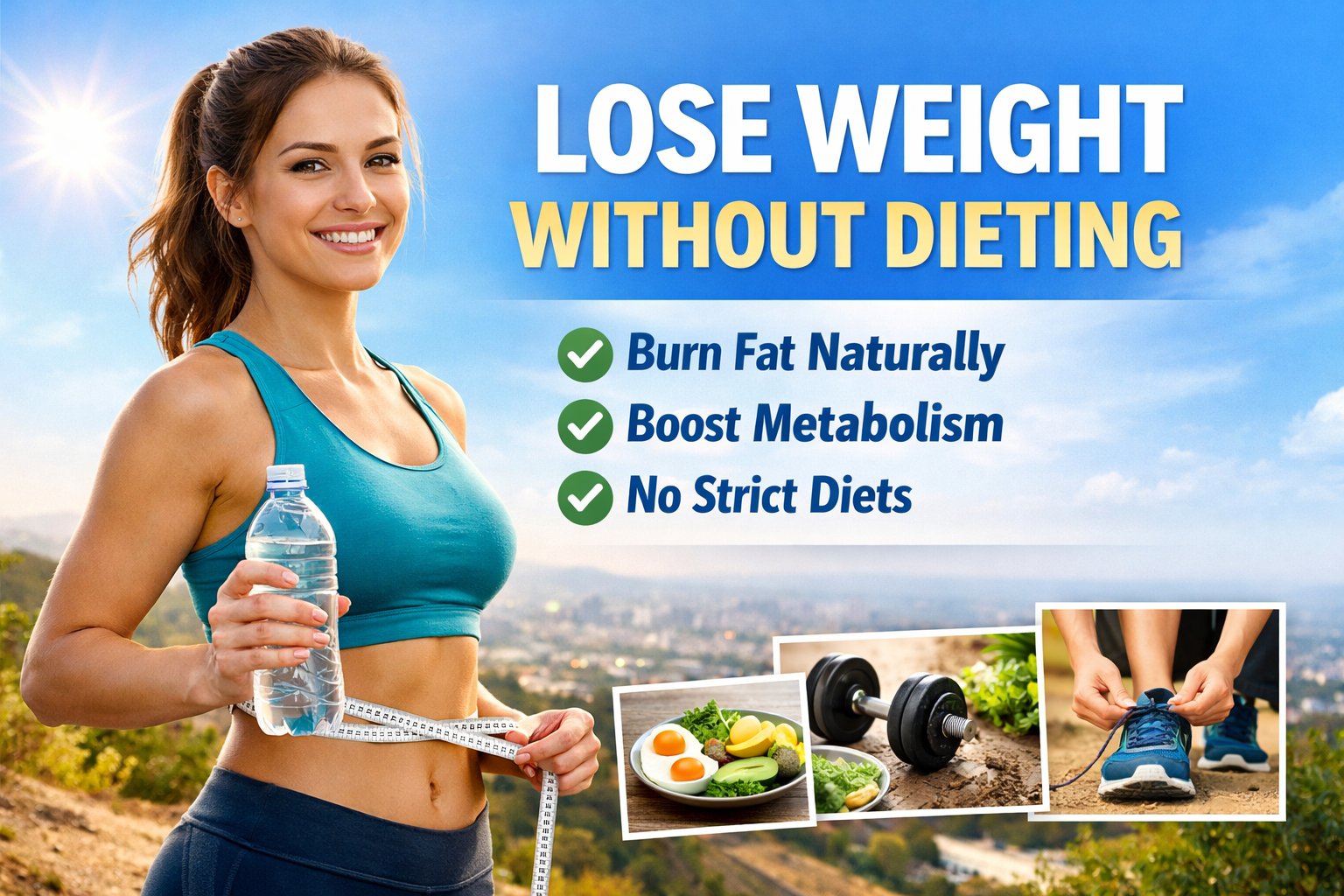
Lose Weight Without Dieting – Science Backed
Trying to lose weight but hate strict diets? You’re not alone. Research from the National Institutes of Health (NIH) shows that most restrictive diets fail because they trigger cravings, stress, and rebound weight gain.
The good news? You can still lose weight without counting calories or cutting carbs.
Below are science-backed lifestyle tweaks that naturally control hunger hormones, improve metabolism, and help your body burn fat — without following a “diet.”
Why Dieting Fails – Backed by Science
Many weight-loss plans fail because:
-
They trigger ghrelin, the hunger hormone
-
They dramatically lower metabolism
-
They create food obsession
-
They cause emotional binge eating
-
They restrict nutrients the body needs
Instead of dieting, behavior-based fat loss works — meaning small changes repeated daily.
11 Science-Backed Ways to Lose Weight Without Dieting
1. Drink Water Before Eating
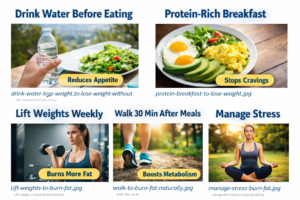
Drinking 400–500 ml of water 30 minutes before meals reduces appetite and calorie intake.
How it works:
Water stretches the stomach → signals fullness → reduced hunger.
Pro tip: Replace sodas with water and drop hundreds of calories weekly.
2. Prioritize Protein at Breakfast
Studies show that 25–30g of protein in the morning lowers cravings for up to 60%.
Good protein sources:
-
Eggs
-
Greek yogurt
-
Cottage cheese
-
Chicken
-
Tofu
Protein stabilizes blood sugar and prevents overeating.
3. Sleep 7–9 Hours a Night
Harvard research confirms sleep deprivation increases:
-
Hunger hormones
-
Belly fat storage
-
Late-night cravings
Better sleep = better weight control.
4. Slow Down While Eating
The brain needs 20 minutes to sense fullness.
If you eat fast, you overeat.
Try:
-
Chew slowly
-
Put the fork down between bites
-
Eat mindfully
5. Lift Weights 2–3 Times per Week
Muscle burns more calories than fat — even while resting.
Benefits:
-
Faster metabolism
-
Better insulin response
-
Less belly fat
Strength training does more for fat loss than cardio alone.
6. Walk 8,000–10,000 Steps Daily
Walking after meals cuts blood sugar spikes and improves fat burn.
Even:
-
10-minute walks
-
After lunch & dinner
help your body use fat efficiently.
7. Reduce Liquid Calories
Liquid sugar turns into belly fat fast. Cut:
-
Sodas
-
Sweetened tea
-
Coffee with sugar
-
Packaged juices
Replace with water, lemon water, or herbal tea.
8. Increase Fiber Intake
Fiber keeps you full and feeds good gut bacteria.
Great sources:
-
Oats
-
Apples
-
Lentils
-
Beans
-
Vegetables
Aim for 25–30g daily.
9. Manage Stress
Stress raises cortisol, which stores fat — especially belly fat.
Try:
-
Deep breathing
-
Meditation
-
Short walks
-
Yoga
Just 5–8 minutes daily reduces emotional eating.
10. Stop Eating Late at Night
Eating close to sleep increases fat gain.
Try a 12-hour fasting window, like 8pm–8am.
Not a “diet” — just time-restricted eating.
11. Use Smaller Plates
Your brain eats with your eyes.
Smaller plates = smaller portions = fewer calories.
This simple trick reduces intake by 20–25%.
⭐ Bonus Tip: Don’t Fear Healthy Fats
Good fats improve fullness:
-
Avocado
-
Olive oil
-
Salmon
-
Almonds
They help the body burn more fat long-term.
FAQs
1. Can I lose weight without diet or exercise?
Yes — lifestyle modifications (sleep, stress control, water intake) change hunger hormones and metabolism. Exercise accelerates progress but is not mandatory.
2. How long before I see results?
Most people notice changes in 2–4 weeks depending on consistency.
3. Can walking alone reduce belly fat?
Walking improves metabolic health, especially after meals. Paired with strength training, results improve dramatically.
4. Is intermittent fasting a diet?
Technically no — it doesn’t tell you what to eat, only when, making it easier to follow.
5. Do I need supplements?
Not required. Supplements help only if you lack nutrients. Lifestyle matters more.
🏁 Conclusion
Losing weight doesn’t require suffering through diets.
By supporting your hormones, metabolism, movement, hydration, sleep, and portion habits, your body naturally burns more fat.
Small habits repeated daily → big long-term results.
Focus on consistency, not restriction — and watch your body change.